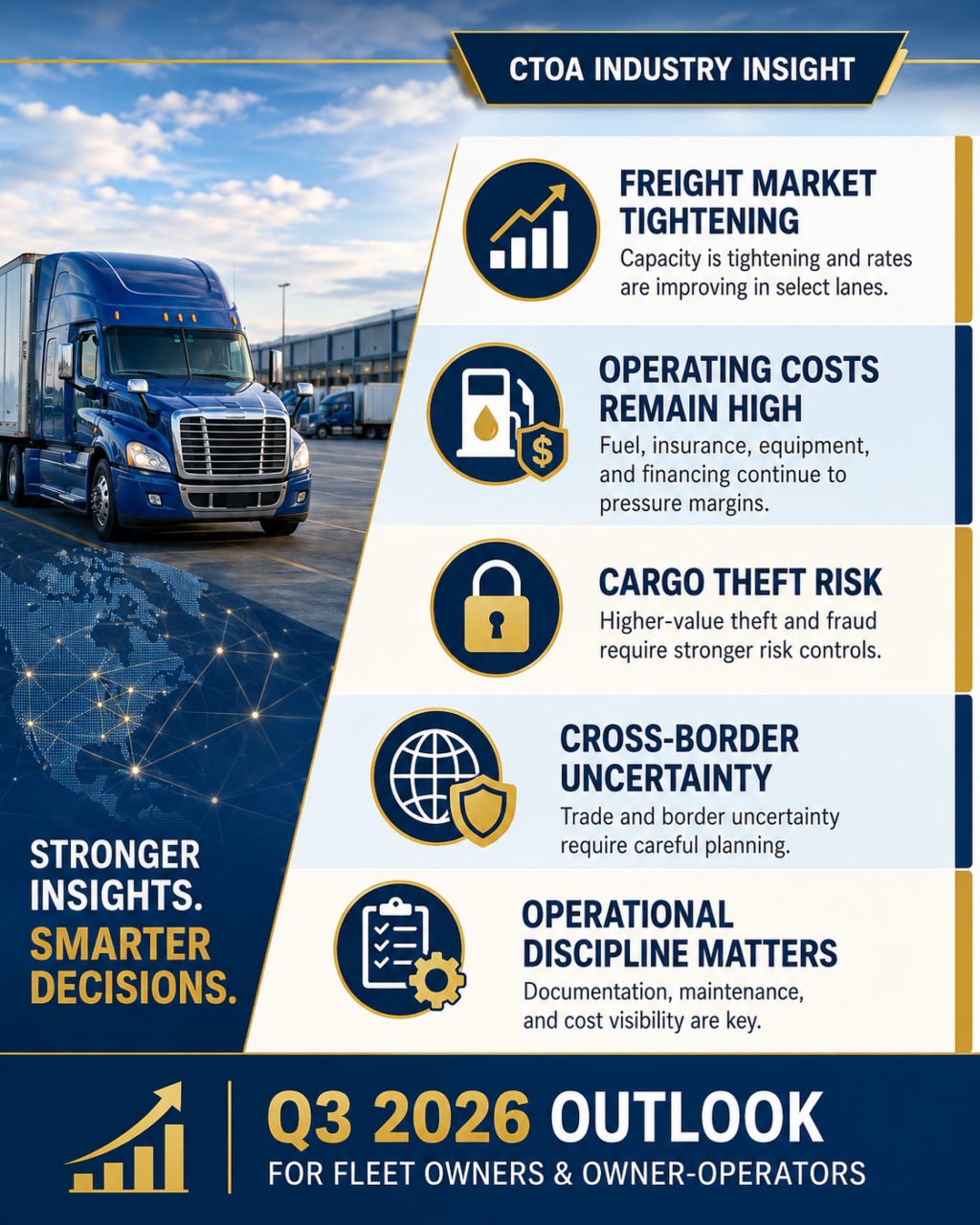
The future of trucking will not be strengthened by reducing it to a single narrative. It will be strengthened by understanding the full picture. Because Canada’s supply chain does not run on policy papers alone.
It is 3:47 in the morning.
Somewhere on Highway 401, a truck driver is finishing his second coffee, checking his mirrors, and merging onto an empty highway. He left home before his children woke up. He will not be there when they go to bed tonight. Maybe not tomorrow night either.
He is not on television, He is not sitting on a government panel and nobody is quoting him in policy debates.
Yet without him, grocery store shelves do not stay stocked, factories do not receive parts, and businesses across Canada cannot operate.
Behind every policy discussion about trucking is a real person. A driver, an owner-operator, a small-business owner, a family trying to make a living in one of the most demanding industries in the country.
That is why Canada’s trucking policy debate needs a reset.
Because too much of the conversation is being conducted as though the industry has remained unchanged for the last fifteen years. It hasn’t, and that matters.
Fifteen years ago, most Canadians accepted that deliveries would take several days. E-commerce was a small part of retail activity. Few consumers expected real-time tracking. Very few expected groceries or household products delivered to their door within hours.
Today those expectations are routine, Consumers expect speed, Businesses expect precision and Supply chains operate in real time.
The transformation was driven by technology, changing consumer behaviour, and the rapid growth of digital commerce.
When Amazon changed how Canadians shop, it changed how freight moves. When Instacart changed how Canadians buy groceries, it changed supply chains and When food delivery platforms expanded, they created entirely new expectations around speed and convenience.
The trucking industry adapted to those changes. Dispatch systems became more sophisticated. Visibility requirements increased. Customers demanded tighter delivery windows and Freight markets became more competitive.
At the same time, operating costs continued to rise. Insurance and equipment costs increased. Regulatory requirements expanded and Labour shortages became more pronounced.
In many ways, trucking became the connective tissue of Canada’s modern economy.
Yet much of the public discussion still relies on assumptions and policy frameworks developed for a very different era. Bad diagnoses often lead to bad policy.
If we want effective transportation policy, we must begin with an accurate understanding of the industry as it exists today. Too often, people talk about trucking without talking about the people who keep it moving.
Carriers, Owner-operators, Fleets, Classifications.
But behind those terms are people.
An owner-operator is often someone who spent years saving for a down payment on a truck. Someone who took a financial risk believing that hard work and determination could build something meaningful. Someone who gets up before most Canadians are awake because their name is on the truck and their reputation is attached to every delivery.
Many of these entrepreneurs are newcomers to Canada.
For decades, trucking has been one of the most accessible pathways to entrepreneurship in this country. Many drivers arrived in Canada with little more than ambition and a willingness to work. They built businesses and created jobs, They bought homes and contributed to their communities.
Their stories deserve to be part of the conversation too.
One of the biggest misconceptions about trucking is that it is dominated by large corporations.
The reality is very different.
According to recent government data, more than 83 per cent of trucking establishments employ fewer than five people. Behind many company names is not a corporate boardroom. It is a family business. A husband-and-wife operation, A first-generation entrepreneur. A small fleet trying to survive through freight downturns, rising insurance costs, increasing operating expenses, and intense competition.
These businesses form the backbone of Canada’s trucking sector. Their experiences deserve to be heard when policies affecting the industry are being developed.
There is another side of trucking that receives far less attention.
Mental health.
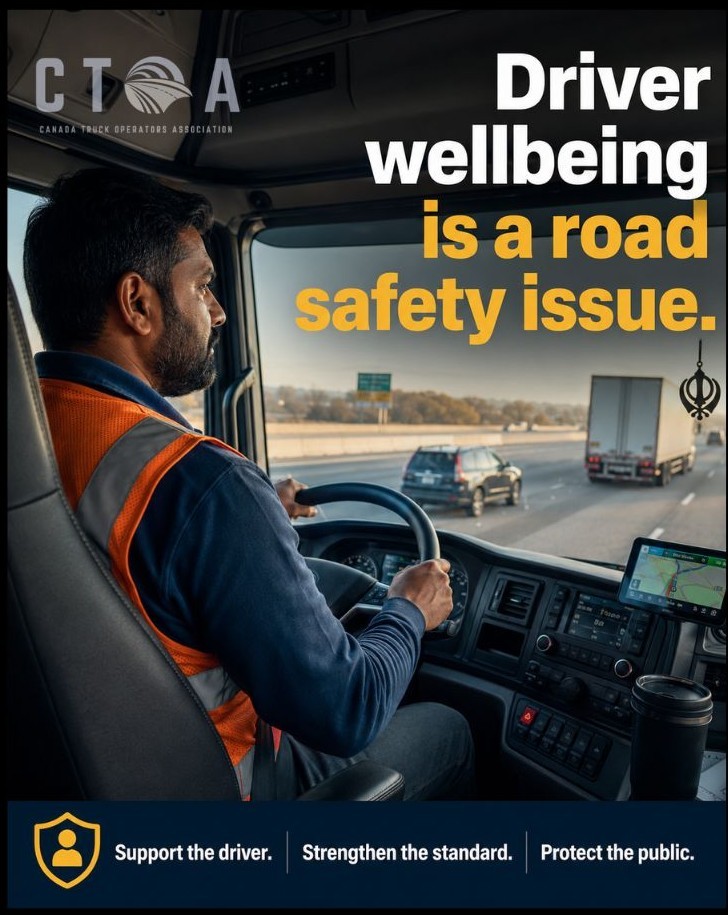
Truck driving can be one of the loneliest professions in Canada. Drivers spend days and sometimes weeks away from home. They work through difficult weather conditions. They face financial uncertainty. They carry enormous responsibility every time they get behind the wheel.
When freight rates decline, When equipment breaks down. When business costs rise and when personal challenges emerge.
Many drivers face those pressures alone.
Loneliness, financial stress, and long periods away from family are realities that cannot be measured on a balance sheet, but they have very real consequences.
As Canada continues to have important conversations about workplace wellness and mental health, trucking should not be left out of that discussion.
Mental health is not separate from safety. Mental health is not separate from performance and mental health is not separate from sustainability.
They are all connected.
Acknowledging the realities of trucking should never be confused with lowering expectations. Safety must remain non-negotiable. The overwhelming majority of professional drivers understand this better than anyone.
Every day they operate equipment weighing tens of thousands of kilograms while sharing the road with families and communities. They understand the consequences of mistakes.
Most carriers invest heavily in training, maintenance, compliance programs, and safety systems because they understand what is at stake.
Accidents cost lives, accidents damage businesses, add to insurance costs and ratings and Accidents affect entire communities.
The challenge for policymakers is not choosing between safety and sustainability.
The challenge is ensuring both.
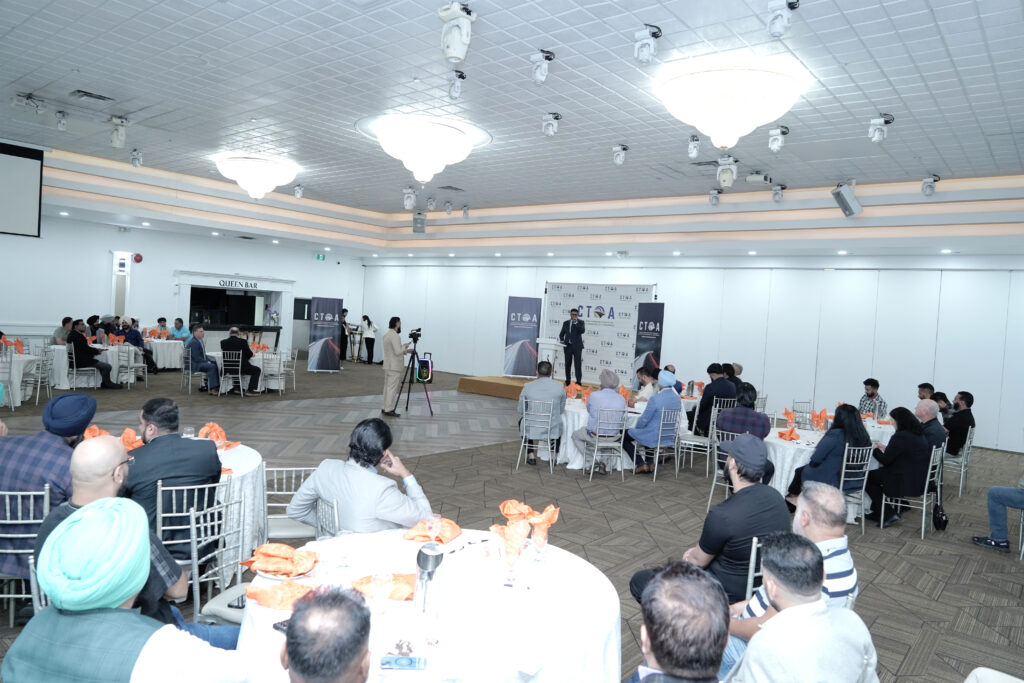
At CTOA, we have made safety, compliance, mental health awareness, and professional development key priorities. Through industry events, training sessions, and stakeholder engagement, we continue to encourage practical solutions that improve safety outcomes while supporting the long-term sustainability of the sector. In recent months, CTOA has brought together drivers, owner-operators, fleet owners, law enforcement, insurers, safety professionals, and industry experts in Montréal and Brampton to discuss practical solutions around safety, compliance, cargo theft prevention, driver well-being, and the future of the industry.
The trucking industry of 2040 will not look like the trucking industry of today.
Artificial intelligence is already transforming route planning, fleet management, predictive maintenance, compliance monitoring, and logistics operations.
Automation will continue to evolve. Electric vehicle technologies will expand and Data-driven decision-making will become standard.
Many of today’s drivers may be the last generation to experience trucking exactly as we know it.
The question is not whether change is coming, The question is whether we are preparing people for it.
The workforce is aging and experienced drivers are retiring.
Fewer young Canadians are entering the profession. The lifestyle is demanding and the public perception is often negative.
The uncertainty can be significant.
If Canada wants a strong supply chain twenty years from now, we need to make trucking a profession that attracts the next generation.
That means supporting entrepreneurship. That means investing in mental health. That means embracing technology and that means creating fair and sustainable opportunities for both drivers and businesses.
Most importantly, it means listening to the people who do the work every day. There are legitimate concerns within the trucking industry.
Issues related to labour standards, safety, compliance, and enforcement deserve attention. Companies that break the law should be held accountable.
Drivers deserve fair treatment, The public deserves safe roads.
None of that is controversial.
But meaningful solutions require a complete understanding of the industry. Policy discussions should include drivers, owner-operators, carriers, brokers, shippers, labour representatives, insurers, safety experts, training providers, and regulators.
No single organization or stakeholder group can fully represent an industry as diverse and complex as trucking.
The future of trucking will not be strengthened by reducing it to a single narrative. It will be strengthened by understanding the full picture.
Because Canada’s supply chain does not run on policy papers alone.
It runs on diesel, data, determination, and the decisions of people who are rarely in the room when those decisions are made about them.
The future of trucking will not be built solely in boardrooms, committee hearings, or government offices. It will be built by listening to the people who live these realities every day. The people who keep Canada moving deserve more than to be talked about.
They deserve to be heard.
Tej Dulat is Director of Government & Public Affairs for the Canada Truck Operators Association (CTOA). CTOA represents drivers, owner-operators, small and mid-sized carriers, brokers, and industry partners across Canada and advocates for safety, professionalism, fair competition, and practical solutions that strengthen Canada’s trucking industry and supply chain.

CTOA hosted a Member Information Session in Brampton focused on driver wellbeing, mental health, safety, cargo theft, training standards, fair enforcement, insurance risk, evidence-based road safety policy and the real operating pressures facing trucking companies.
A key focus of the event was the need to strengthen driver training standards and oversight. Philip Fletcher, President of the Truck Training Schools Association of Ontario, addressed the importance of proper training, road safety, professional readiness and public confidence in the commercial transportation sector.
Chris Wilkinson, CEO of Nordrux Inc., spoke about fitness for duty, occupational health, human resources considerations and drug and alcohol testing awareness in safety-sensitive transportation operations.