

Insurance - CTOA - Canada Truck Operators Association

Panel-discussion-1-1280x686.jpg

April 28, 2026

Event highlights trucking’s central role in Canada’s economy and reinforces the need for practical, real-world solutions across the industry

DOLLARD-DES-ORMEAUX, QC: – The Canada Truck Operators Association (CTOA) brought together more than 600 transportation and logistics professionals, policymakers, and industry leaders at a sold-out National Industry Appreciation & Information Session, marking one of the largest recent gatherings of Canada’s trucking sector.

The event convened stakeholders from Québec and Ontario for focused discussions on supply chain resilience, operational realities, safety, and the evolving needs of Canada’s transportation industry.

Trucking at the Center of Canada’s Economy
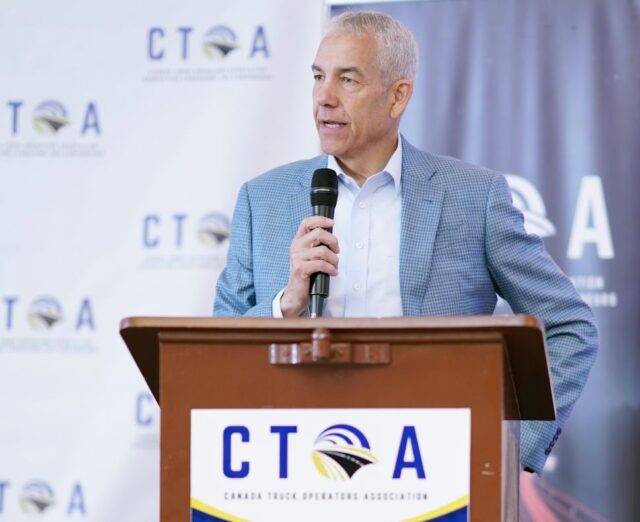
 Frank Baylis, Canadian business leader and former Member of Parliament, emphasized the foundational role of trucking in the national economy.

Keynote speaker Frank Baylis, Canadian business leader and former Member of Parliament, emphasized the foundational role of trucking in the national economy.

“Trucking is not just a sector, it is the backbone of Canada’s economy,” said Baylis, highlighting the importance of long-term infrastructure investment and strategic planning to support national growth and competitiveness.


Government Leaders Emphasize Collaboration and Industry Engagement

Federal and provincial leaders underscored the importance of collaboration between government and industry stakeholders.

The Honourable Marc Miller, Minister of Canadian Identity and CultureThe Honourable Marc Miller, Minister of Canadian Identity and Culture, acknowledged the importance of a coordinated industry voice:

“A strong and organized industry voice is essential in ensuring that key challenges and opportunities are addressed.”


Peter Schiefke, MP, Chair of the House of Commons Standing Committee on Transport, reinforced the sector’s national significance:

“When trucking moves, Canada moves… This gathering reflects the strength of the transportation and logistics sector and its critical role in keeping our economy moving.”

Peter Schiefke, MP, Chair of the House of Commons Standing Committee on Transport, reinforced the sector’s national significance:Additional officials in attendance included MP Sameer Zuberi, MNA Brigitte B. Garceau, and Mayor Alex Bottausci, reflecting engagement across all levels of government.

From Challenges to Practical Solutions

The symposium featured two solution-focused panels addressing:

  • Managing Risk, Costs & Growth in Trucking: Insurance, Financing, AI & data-driven insights
  • Building a Safer Trucking Industry – Maintenance, Responsibility & Practical Solutions

Panel discussion Building a Safer Trucking Industry in Canada - Maintenance, Responsibility & Practical Solutions
Building a Safer Trucking Industry – Maintenance, Responsibility & Practical Solutions

Discussions focused on practical, real-world solutions, including:

  • The growing role of technology and data in managing risk and improving efficiency
  • The importance of preventive maintenance and strong operational discipline
  • Addressing driver well-being and ongoing workforce pressures
  • Strengthening long-term stability through better industry practices

A Ground-Level Perspective on Industry Representation

In opening remarks, CTOA emphasized the importance of ensuring that policy conversations reflect the realities on the ground.

“When trucking moves, Canada moves, yet the voices of the people operating on the ground have not always been fully heard at the national level,” CTOA leadership noted.

Tejpreet (Tej) Dulat“This industry is evolving, and our approach must evolve with it,” said Tej Dulat, representing CTOA leadership.  “Businesses want clarity, workers want opportunity, and everyone wants to operate within a system that is fair, practical, and consistent. CTOA’s role is to help bring those realities into the conversation in a constructive and responsible way.”

Adapting to a Changing Industry

The event also highlighted broader changes shaping the transportation sector, including:

  • Shifting workforce expectations
  • Increased use of digital tools and technology
  • The need for approaches that reflect how today’s operators and businesses function

Participants emphasized that long-term workforce sustainability will depend on the industry’s ability to adapt while maintaining strong standards around safety and compliance.

A Sector That Powers Canada

With nearly 70% of goods in Canada transported by truck, the sector remains a critical pillar of the national economy and supply chain.

Participants reinforced the importance of:

  • Continued infrastructure investment
  • Aligning policy with operational realities
  • Maintaining strong safety and compliance standards
  • Supporting a diverse and evolving workforce

Looking Ahead

CTOA will continue to engage with policymakers and stakeholders across Canada to support a stable, competitive, and forward-looking transportation sector, with a focus on practical solutions, industry collaboration, and long-term sustainability.

Media Contact

Canada Truck Operators Association (CTOA)
info@thectoa.ca
www.thectoa.ca


portfolio_01-1280x853.jpg

March 11, 2026

CTOA Industry Insight / Topic: Insurance, Safety, Policy

The Canadian Truck Operators Association (CTOA) represents trucking operators, fleet owners, brokers, and industry stakeholders across Canada. As discussions continue around rising insurance premiums in the trucking sector, it is important to examine the broader factors influencing transportation risks and insurance costs.

Recent industry conversations have highlighted accident severity and claims costs as key contributors to rising premiums. While these factors certainly play a role, the issue is far more complex and reflects significant economic, infrastructure, and transportation changes that have taken place over the past decade.

A balanced and comprehensive understanding of these factors is essential to developing policies that support both road safety and a resilient national supply chain.

Growth in Traffic and Road Congestion

Canada has experienced significant population growth and economic expansion over the past decade. As cities expand and economic activity increases, the number of vehicles on the road has also grown considerably.

Passenger vehicles, delivery vans, ride‑share vehicles, and commercial trucks have all increased. However, in many regions, road infrastructure has not expanded at the same pace.

Major freight corridors such as the Greater Toronto Area, Montreal, Vancouver, and Calgary are experiencing increasing congestion. Higher traffic density naturally increases the likelihood of road incidents for all road users, not just commercial trucks.

Understanding these broader transportation trends is important when evaluating safety risks and insurance claims across the sector.

Expanding Freight Demand and Supply Chain Growth

Over the past decade, Canada’s supply chain has undergone significant transformation. The rapid growth of e‑commerce, national distribution networks, and just‑in‑time delivery systems has increased demand for freight transportation.

Retailers, manufacturers, and logistics companies rely heavily on trucking to move goods efficiently across the country. As freight demand increases, trucks spend more time on the road and operate across increasingly complex logistics networks.

Trucking remains the backbone of Canada’s supply chain, ensuring that businesses and consumers receive essential goods every day.

Rising Equipment and Repair Costs

Another major factor influencing insurance claims is the rising cost of modern trucking equipment and repairs.

Today’s commercial trucks are significantly more advanced than they were a decade ago. They include complex electronics, safety sensors, and advanced driver‑assistance technologies. While these innovations improve safety and operational efficiency, they also increase the cost of repairs.

In addition, higher labour costs for technicians, global supply chain disruptions, and more expensive replacement parts have contributed to rising repair expenses.

As a result, even relatively minor collisions can generate significantly higher claim values than in the past.

Economic Pressures Across the Transportation Sector

The trucking industry has also experienced broader economic pressures in recent years. Rising fuel prices, higher financing costs for vehicles, inflation in parts and maintenance, and increased labour costs have all affected operating expenses.

These broader economic conditions influence the cost of claims and the financial models used within the insurance sector.

Understanding these pressures helps provide a more complete picture of the challenges faced by both trucking operators and insurers.

Road Safety Is a Shared Responsibility

Road safety is influenced by many factors across the entire transportation ecosystem. Traffic congestion, infrastructure design, driver behaviour across all vehicle types, weather conditions, and road conditions can all contribute to collisions.

For this reason, improving road safety requires a system‑wide approach that involves government, transportation planners, insurers, and industry stakeholders.

Focusing on the broader transportation environment helps ensure that policies address the root causes of safety risks rather than attributing responsibility to a single segment of the industry.

Technology and Safety Improvements

The trucking industry has made significant investments in technology to improve safety and reduce operational risks.

Many fleets are adopting tools such as:

  • telematics systems
  • dash cameras
  • driver monitoring technologies
  • advanced safety management programs

These technologies help companies better understand driving behaviour, identify safety risks early, and strengthen training programs for drivers. Over time, these investments can contribute to safer operations and improved risk management across the industry.

The Importance of Collaboration

Rising insurance costs affect the entire supply chain, including trucking companies, insurers, retailers, manufacturers, and consumers.

The Canadian Truck Operators Association (CTOA) believes that addressing these challenges requires constructive collaboration between government, insurers, and industry stakeholders.

Policy discussions should focus on:

  • improving transportation infrastructure
  • strengthening safety programs and driver training
  • addressing insurance fraud and cargo theft
  • supporting the adoption of safety technologies
  • ensuring transparency and stability in insurance markets

A collaborative approach will help ensure that policies support both road safety and a stable, efficient supply chain.

Key Industry Trends Influencing Insurance Costs

Several long‑term transportation trends help explain the changing insurance environment:

  • Vehicle growth: Canada’s total registered vehicles increased from roughly 23 million in 2013 to over 26 million in 2022 (Statistics Canada).
  • Urban congestion: Drivers in major freight corridors such as the Greater Toronto Area lose over 100 hours annually due to traffic congestion.
  • Rising truck values: A modern heavy‑duty commercial truck can now cost $200,000–$250,000, significantly higher than a decade ago.

These broader transportation trends illustrate why insurance risk and claim costs must be viewed within the context of a growing and increasingly complex transportation network.    (Sources: Statistics Canada, transportation studies, and industry market data.)

Supporting a Strong and Sustainable Trucking Industry

Trucking remains essential to Canada’s economy. From food and consumer goods to industrial materials and medical supplies, most products rely on trucking at some point in their journey.

Ensuring the long‑term sustainability of the trucking sector is therefore critical for the stability of Canada’s supply chain.

By examining the full range of factors influencing insurance costs and working together across sectors, policymakers and industry leaders can develop balanced solutions that support both economic growth and safer roads for all Canadians.

Canadian Truck Operators Association (CTOA)
Supporting trucking operators and strengthening Canada’s supply chain.