
23 - CTOA

Bring to the table win-win survival strategies to ensure proactive domination. At the end of the day, going forward, a new normal that has evolved from generation.
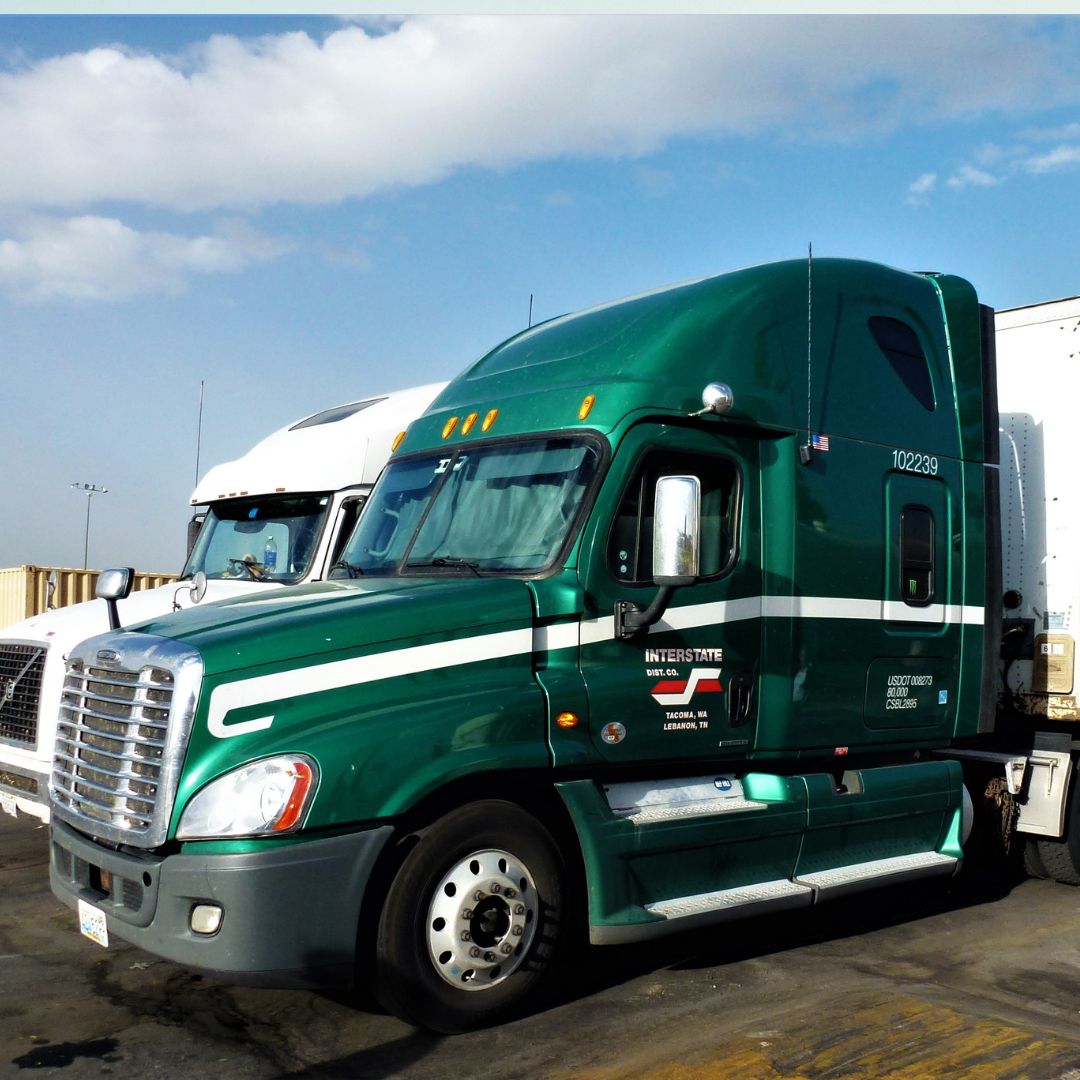
Truck-5.jpg

February 23, 2026

OTTAWA, ONFeb. 23, 2026, The Canada Trucking Operators Association (CTOA) is raising awareness about mounting pressures in Canada’s long haul trucking sector, as member carriers report driver shortages that could affect supply chain reliability in the months ahead.

Member fleets, brokers report that some carriers are operating with up to a 15 percent shortfall in driver capacity. Few industry leaders say it is becoming harder to recruit and retain qualified long haul drivers, increasing the risk of service disruptions and higher logistics costs. In Q3 2025, Statistics Canada reported 11,600 vacant positions for transport truck drivers, underscoring the need for sustained workforce solutions.

Workforce Under Pressure: Racism, Discrimination, and Driver Retention

CTOA has received reports from racialized and newcomer drivers and fleet owners of increased racism, including discriminatory remarks, online hostility, and concerns that administrative enforcement and compliance activity may be applied unevenly or perceived as targeting individuals based on race or newcomer status.

New Canadian drivers make up a significant part of Canada’s trucking workforce and help maintain supply chain continuity. Reports of hate messages, targeted rhetoric on social media, unfair public scrutiny, and perceived unequal enforcement are creating concern within the industry. These pressures can discourage people from entering the sector and contribute to drivers leaving the industry, worsening workforce shortages.

CTOA affirms that no one keeping Canada’s supply chain moving should face racism or hostility for doing their job. The Association is calling for a national, solutions focused effort that promotes respect, professionalism, and dignity for transportation workers across Canada, including clear expectations for fair and consistent treatment in administrative and compliance processes.

Broader Supply Chain Impact

If current workforce pressures persist, driver shortages are likely to deepen. That will strain the movement of food and other essential goods, reduce reliability in long haul logistics, and increase delivery costs across the economy. Those costs ultimately show up in higher prices for Canadians and greater uncertainty for businesses that depend on timely freight.

“If we keep losing drivers, the impact will be felt everywhere,” said Tej Dulat, CTOA. “Food and essential goods do not move without a stable workforce. When capacity tightens, costs rise and Canadians pay the price. Protecting the supply chain means retaining experienced drivers, ensuring fair compensation, and fostering a professional environment where every driver is treated with respect, dignity, and free from racism or harassment.”

A Call for Collaboration

CTOA is calling on the federal government, working with provinces and industry, to:

  • Investigate systemic and targeted racism affecting racialized and newcomer drivers, including reported concerns about uneven or biased administrative and compliance treatment, and the impacts on retention
  • Promote respect for transportation professionals, with zero tolerance for racism and harassment
  • Ensure compliance and enforcement processes are clear, consistent, and fair, with practical requirements that do not create perceptions of uneven treatment
  • Provide clear, consistent guidance for incorporated drivers and owner operators so legitimate small operators can enter and remain in the sector without uncertainty

Canada’s trucking industry remains resilient, but resilience requires stable policy, professional respect, and coordinated action to keep goods moving and costs under control for Canadians.

About CTOA

The Canada Trucking Operators Association (CTOA) advocates for the safety, sustainability, and prosperity of Canada’s transportation professionals and the supply chain they support.


February 21, 2026

Source: Based on the Canada Revenue Agency (CRA) Webinar: “Reporting fees for service transactions in the trucking industry” (January 28, 2026)

This document summarizes the key information and official responses from the CRA regarding the reporting requirements for fees for service (RFS) in the trucking industry. It is designed to help CTOA members understand their obligations and avoid potential penalties.

Important Note: The CRA has lifted the moratorium on penalties for non-compliance. For the 2025 and later calendar years, penalties will be applied for failures to report fees for service correctly.

For the most authoritative and up-to-date information, always refer to: Canada.ca/trucking-taxes and Canada.ca/trucking-payments.

Do These Rules Apply to My Business? (Scope & Applicability)

Q: How do I know if my business is considered to be in the “trucking industry” for these rules?
A: Your business is considered to be operating in the trucking industry if your primary source of income comes from “trucking activities.”

  • “Primary source” means more than 50% of your gross business revenue (not net income) comes from these activities.
  • You must review all your business’ income-earning activities, not just those done by owner/operators.

Q: What counts as a “trucking activity”? What does not?
A: The distinction is critical.

  • Applicable Trucking Activities (Count toward the 50% threshold):
    • For-hire trucking (e.g., long-haul, local delivery)
    • Acting as a freight broker (intermediary between shippers and carriers)
    • Providing trucking services through owner/operators
  • Non-Applicable Trucking Activities (Do NOT count toward the 50% threshold):
    • Moving company services: Packing, unpacking, warehousing, handling, storage, and crating.
    • Maintenance and repairs on trucks.
    • Renting or leasing trucks or trailers to others.
    • Courier and messenger services (except those integral to trucking).

Q: My company is a customs broker that also offers transportation brokerage. Transportation is about 40% of our revenue. Do we need to issue T4As to the trucking companies we hire?
A: Yes. If your primary source of income is not trucking, the general T4A reporting rule still applies (you must report payments over $500 for services). However, the specific lift of the moratorium on penalties only applies to businesses in the trucking industry. Since freight brokerage is an applicable trucking activity, if your transportation revenue is more than 50% of your gross revenue, you are in the trucking industry and will face penalties for non-compliance. If it is less than 50%, you are not considered in the industry but must still issue T4As (though the penalty moratorium technically doesn’t apply to you).

 To Whom Must I Issue a T4A? (Recipients & Recipient Types)

Q: Do I only have to issue T4As to individual owner/operators?
A: No. The requirement applies to payments made to any type of business, including:

  • Sole proprietors (individuals)
  • Partnerships
  • Corporations (Limited or Incorporated)
  • Trusts

If you pay a corporation (CCPC) in the trucking industry over $500, you must report it in Box 048 of the T4A. This is the main change leading to the penalty lift.

Q: I broker loads to a factoring company. Who gets the T4A?
A: You issue the T4A to the trucking company/service provider that performed the work, not the factoring company. Your contract for the service is with the trucking company, and the factoring company is simply a third party that purchased their invoice.

Q: Do we need to issue T4As for small, occasional payments, like to someone who cleans the office?
A: Only if the total payments to that person or company for the calendar year exceed $500. If the total is under $500 and you did not withhold any tax, you do not need to issue a T4A.

Q: Do we need to issue T4As to interline carriers?
A: Yes. Interline arrangements are payments for services between carriers. If the interline carrier’s primary source of income is trucking, they are in the industry, and the payment must be reported.

Q: Do we need to issue a T4A to a non-resident trucking company?
A: Generally, no. Payments to non-residents for services provided in Canada are reported on a T4A-NR slip, not a standard T4A. Payments for passive income (like interest) to non-residents go on an NR4 slip. The tax residency of the corporation you contract with determines which form to use.

How to Fill Out the T4A Slip Correctly

Q: Do we report the gross amount or the net amount after deductions (like fuel, insurance, etc.)?
A: You must report the gross amount of fees for services paid in the year in Box 048. Do not deduct anything.

Q: Should the amount on the T4A include GST/HST?
A: No. Do not include GST/HST or PST in the amount reported in Box 048.

Q: How do we report payments made in US dollars?
A: You must convert the payment to Canadian dollars using the Bank of Canada exchange rate on the payment date. Other verifiable same-day rates may be accepted.

Q: Do we report amounts based on when the invoice was received or when it was paid?
A: You report based on when the amount was paid. If you receive an invoice in December 2025 but pay it in January 2026, that payment is reported on the 2026 T4A.

Q: What identifying information do we need from the recipient?
A:

  • For a business (sole proprietor, partnership, corporation), you must enter their Business Number (BN) in Box 013. (e.g., 123456789RT0001).
  • The GST/HST number is the “RT” program account extension of the nine-digit Business Number (e.g., 123456789RT0001).

Q: What if I ask a subcontractor for their Business Number but they don’t provide it?
A: You are still required to issue the T4A slip with the information you have. You must also document your reasonable efforts to obtain the number to avoid penalties. If filing electronically, the CRA allows you to use a placeholder BN (e.g., 000000000RC0000) when the recipient fails to provide one.

Filing, Deadlines, and Penalties

Q: Is e-filing required for the 2025 T4As?
A: Yes. If you are filing more than five (5) T4A slips (i.e., six or more), electronic filing is mandatory. You can file via CRA web forms or internet file transfer (XML) through My Business Account. Failure to e-file may result in a penalty.

Q: Will the CRA penalize me for timing differences between my T4A reporting (calendar year) and a corporation’s T2 tax return (fiscal year)?
A: No. The CRA understands that these are distinct reporting obligations with different rules. These differences alone will not trigger a compliance review. They will only look closer if there are other signs of non-compliance.

Q: Can you clarify the penalty? Will it only apply if both companies are in the trucking industry?
A: For the 2025 and later calendar years:

  • The penalty applies to a payer who is a business operating in the trucking industry.
  • The penalty is for failing to report payments of fees for services exceeding $500.
  • The payment must be made to a Canadian-Controlled Private Corporation (CCPC) that is also operating in the trucking industry.
  • The amount must be reported in Box 048 of the T4A.
  • Penalties are issued under subsection 162(7) of the Income Tax Act.

In short: If you are a trucking company paying a trucking corporation over $500, you must file the T4A or face a penalty.